Same Riddle, Brand-New Brain: The Weird Science of Solving Puzzles You've Already Cracked
Picture this: you're at an escape room with a group of friends, and somewhere around the thirty-minute mark, you realize you've done this one before. Same rusty padlock. Same cryptic note taped to the wall. Same "aha" moment waiting at the end. You know you've cracked this puzzle. So why does your brain feel like it's starting completely from scratch?
Welcome to one of the most underappreciated quirks in all of puzzle psychology — the phenomenon where solving the same riddle twice feels like two entirely separate mental adventures. It's not a glitch. It's not embarrassing. It's actually a deeply fascinating feature of how your brain stores, retrieves, and rebuilds information over time. And if you've ever wondered why your favorite puzzle book never quite loses its charm no matter how many times you revisit it, this one's for you.
Your Brain Doesn't Hit "Save" the Way You Think
Here's the uncomfortable truth about human memory: it's not a filing cabinet. It's more like a Wikipedia page that anyone — including your own subconscious — can quietly edit between visits.
When you solve a puzzle for the first time, your brain encodes the experience of solving it, not just the answer itself. Neuroscientists call this episodic memory — the rich, contextual record of where you were, how you felt, and what led you to the solution. The raw answer? That often gets stored separately, in something closer to semantic memory, which is the part of your brain that holds facts without the story attached.
Over time, and especially without reinforcement, those two memory types can drift apart. You might retain a vague sense that you've encountered a riddle before without being able to pull up the solution. Or you remember cracking something clever but can't quite reconstruct the logic that got you there. The result? A puzzle that feels both hauntingly familiar and genuinely challenging at the same time.
Researchers studying the "forgetting curve" — a concept first introduced by German psychologist Hermann Ebbinghaus in the 1880s — have consistently shown that without active recall, humans lose access to a significant chunk of learned information within days. For puzzle solutions specifically, that curve can be steep. The answer to a lateral thinking riddle you solved eighteen months ago? There's a real chance it's sitting behind a locked door in your own memory.
Context Is Everything (And Puzzle Designers Know It)
Here's where things get genuinely sneaky. Professional puzzle creators and escape room designers don't just understand this psychological quirk — they deliberately engineer experiences around it.
Take the concept of contextual encoding. When your brain first solves a puzzle, it doesn't just store the answer; it bundles the solution together with all the surrounding sensory details. The lighting in the room. The background noise. Whether you were feeling stressed or relaxed. The company you were with. Change enough of those variables, and your brain essentially treats the same puzzle as a new encounter, because the retrieval cues that would unlock your memory simply aren't there.
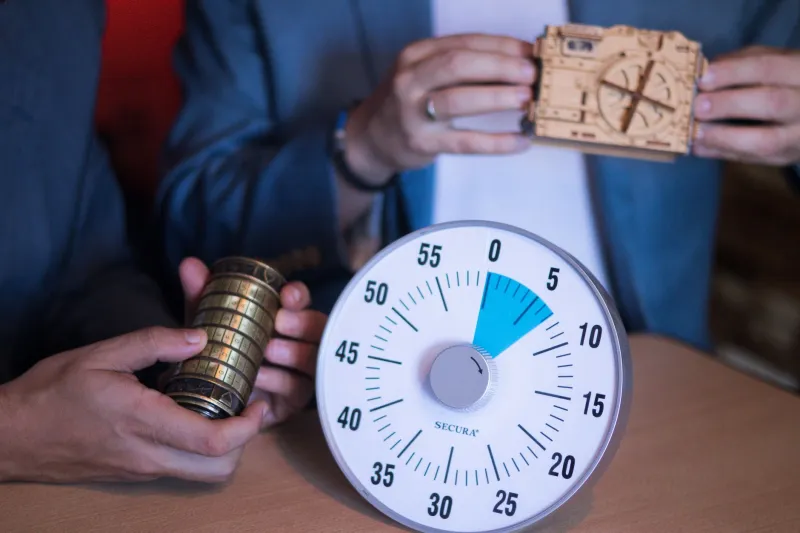
Escape room companies have quietly used this to their advantage for years. Many venues cycle the same core puzzle mechanics through different themed rooms — a cipher wheel in a spy thriller setting hits completely differently than the same cipher wheel inside a haunted mansion. The underlying challenge is identical. The experience feels entirely fresh. It's not deception; it's design.
The same logic applies to riddle books and puzzle apps. When Wordle exploded across the US in late 2021 and early 2022, part of its genius wasn't just the daily format — it was the way a simple five-letter constraint could feel like a unique intellectual challenge every single morning, even though the underlying rules never changed. The new word provided just enough contextual novelty to keep the brain engaged, even for players who'd been at it for months.
Famous Riddles That Prove the Point
Consider the classic "I speak without a mouth and hear without ears" riddle — the answer being an echo. This one has been floating around American campfires and classroom worksheets for generations. Yet surveys and informal studies of puzzle communities consistently show that a large percentage of people who've heard it before still pause, still feel that familiar mental friction, before the answer clicks back into place.
Why? Because the riddle is designed to activate divergent thinking — it pulls your brain away from literal interpretation and forces a metaphorical leap. That cognitive process takes real effort every single time, regardless of whether you've made the leap before. The path to the answer feels like work even when the destination is stored somewhere in your memory.
Escape room veterans have reported similar experiences with puzzle types they've mastered. A seasoned player who's solved dozens of lock-combination puzzles will still feel genuine tension when a new room presents one — because the specific combination is unknown, even if the category of challenge is familiar. The brain narrows its focus to the novel detail and, in doing so, briefly forgets the broader pattern.
The "Tip of the Tongue" Trap
There's another layer to this puzzle paradox that anyone who's ever had a word stuck on the tip of their tongue will recognize immediately. Psychologists call it presque vu — the frustrating sensation of almost-knowing something. It's common in puzzle-solving contexts, especially with riddles you've previously cracked.
You know you know the answer. You can almost feel it. But the harder you reach for it, the further it retreats. This happens because direct, effortful retrieval can sometimes interfere with memory access rather than assist it — a counterintuitive finding that's been replicated in cognitive science labs across the country. The implication for puzzle lovers is oddly comforting: that sense of struggling with a familiar riddle isn't a sign of a failing memory. It's just your brain doing exactly what brains do.
How to Use This to Your Advantage
So what do you do with all this? A few things, actually.
If you're a casual puzzle fan who loves the feeling of a fresh challenge, lean into revisiting old favorites after a deliberate gap. Six months to a year is usually enough time for the contextual details to fade while keeping the faint, satisfying echo of familiarity. You get the best of both worlds: the thrill of a challenge with the warm comfort of recognized territory.
If you're building puzzle skills more seriously — working on logical deduction, pattern recognition, or lateral thinking — revisiting solved puzzles is a legitimate training technique. The second pass strips away the novelty anxiety and lets you focus on how you're thinking, not just what you're solving. That metacognitive awareness is where real puzzle mastery lives.
And if you're ever designing puzzles yourself — for a game night, a team-building event, or just for fun — remember that context is your most powerful tool. Wrap the same core challenge in a new story, a different aesthetic, a fresh set of characters, and you haven't recycled a puzzle. You've reinvented one.
The Riddle That Never Really Ends
There's something quietly poetic about the fact that our brains are wired this way. In a world where we're constantly chasing the new, the novel, the never-before-seen, it turns out that a puzzle you've already solved can still surprise you. Memory is imperfect, context is everything, and the human brain — with all its elegant messiness — ensures that the same riddle can be a completely different journey depending on when and where and who you are when you encounter it.
That's not a bug in the system. That's the whole trick.