When Getting Good at Puzzles Makes You Worse: The Hidden Trap of Expertise
Here's a scenario that'll feel uncomfortably familiar. You've been crushing the daily word puzzle for three months straight. Your streak is legendary. Friends text you their scores like they're confessing sins. Then someone slides a logic grid puzzle across the table — the kind where you figure out which neighbor owns the fish — and your brain just... stalls. Completely. Like a car that won't start on a cold morning.
You haven't gotten dumber. In fact, you've gotten sharper. That's exactly the problem.
Welcome to what puzzle designers and cognitive researchers are calling the expertise trap — a weird, counterintuitive phenomenon where getting genuinely skilled at one category of brain challenge can quietly erode your ability to tackle something different. The better you get, the narrower your mental toolkit becomes. And most puzzle lovers have absolutely no idea it's happening to them.
Your Brain Is a Pattern-Matching Machine — For Better and Worse
At its core, human cognition is obsessed with patterns. When you solve enough of the same puzzle type, your brain stops working through problems from scratch. Instead, it builds what neuroscientists call cognitive schemas — essentially mental shortcuts that let you recognize familiar structures and apply proven strategies almost automatically.
This is enormously useful. It's why an experienced crossword solver can fill in a Thursday NYT grid in half the time it took them as a beginner. Their brain has catalogued thousands of common clue structures, wordplay conventions, and fill patterns. The heavy lifting happens below conscious awareness.
But here's where it gets tricky. Those same schemas don't just speed things up — they also filter what you notice in the first place. Your brain starts scanning incoming information for the patterns it already knows, quietly ignoring signals that don't match its existing library. Cognitive scientists call this functional fixedness, and it's the reason seasoned experts in any domain can be completely blindsided by problems that require thinking outside their established framework.
Dr. Maya Krishnamurthy, a cognitive psychologist who consults with puzzle design studios, puts it bluntly: "The expert's biggest enemy isn't difficulty — it's familiarity. Once your brain decides it knows what type of problem it's looking at, it commits to a solving strategy before it's even fully read the clues."
Escape Rooms Know This Better Than Anyone
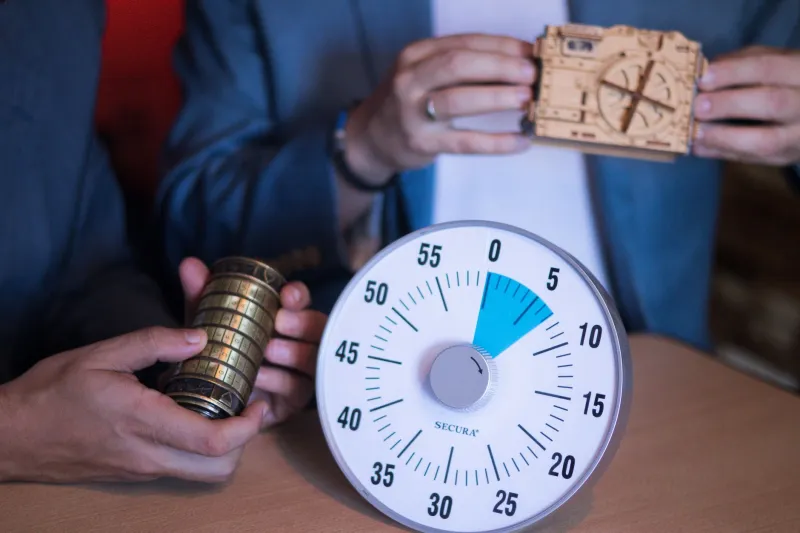
Professional escape room designers have been quietly exploiting this effect for years. The best rooms aren't just hard — they're disorienting in a very specific way. They deliberately borrow visual and structural cues from one puzzle genre while demanding a completely different solving approach.
Take a room that looks like it's full of number-based combination locks. Experienced players immediately start hunting for four-digit codes. Their pattern recognition kicks in hard. But the actual solution might involve sound, color sequencing, or physical object manipulation — none of which registers while the brain is locked into its "find the number code" mode.
"We love experienced players," admits one puzzle designer who works with a Chicago-based escape room company. "Not because they're easy to beat, but because their confidence makes them predictable. A first-timer looks at everything with fresh eyes. A veteran walks in with a mental checklist, and sometimes that checklist is the thing trapping them."
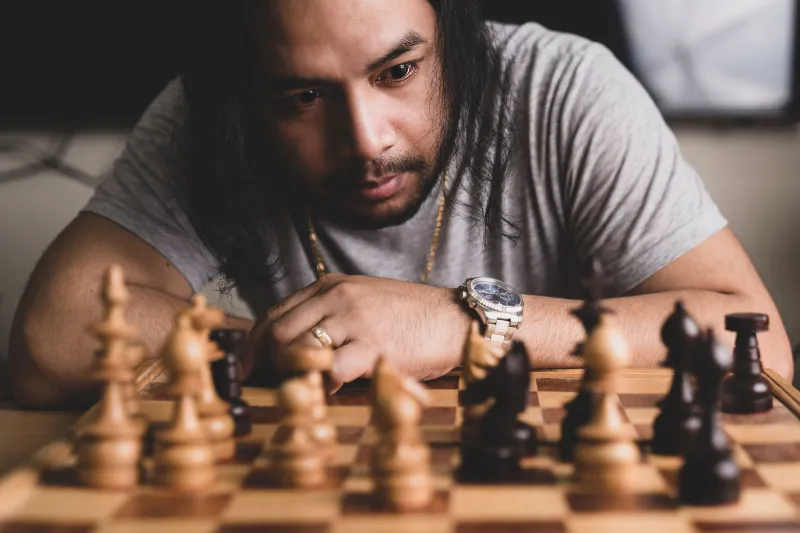
This isn't a knock on experience. It's just how expertise works. The chess grandmaster who transitions to poker has to actively unlearn certain instincts. The marathon runner who picks up cycling discovers that cardiovascular fitness doesn't automatically translate into the right muscle memory. Puzzle mastery works the same way.
The Transfer Problem in Puzzle Solving
Researchers studying learning and skill transfer have a term for what happens when skills from one domain fail to carry over to another: near transfer versus far transfer. Near transfer is easy — if you're good at Sudoku, you'll probably pick up KenKen (a math-based grid puzzle) faster than a complete beginner. The logical structures overlap enough that your existing mental models get you most of the way there.
Far transfer is the hard part. Moving from word puzzles to spatial reasoning challenges, or from deductive logic games to lateral thinking riddles, requires your brain to essentially boot up a different operating system. And the more deeply your current OS is installed, the more friction that switch creates.
A 2019 study out of Carnegie Mellon found that participants who had trained extensively on one puzzle category showed measurably slower initial performance on unrelated puzzle types compared to novices — even when the novices had less general problem-solving experience. The experts caught up quickly once they adjusted, but that initial lag was real and significant.
The researchers described it as "schema interference" — your established mental models aren't just neutral; they're actively competing with the new approach you need to adopt.
So How Do You Stay Sharp Across the Board?
The good news: this isn't a permanent condition. Cognitive flexibility — the ability to shift fluidly between different thinking styles and problem frameworks — is absolutely trainable. It just requires intentional effort.
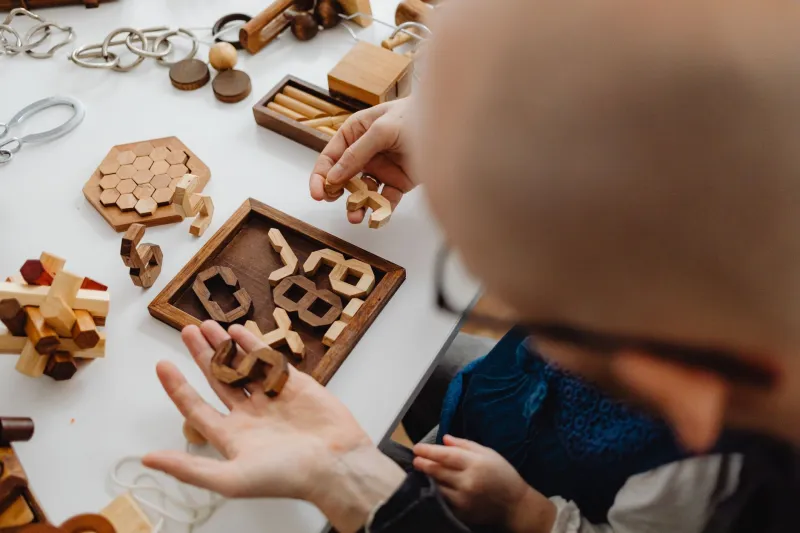
Rotate your puzzle diet regularly. Don't let yourself settle into a single genre for more than a few weeks at a time. If you've been living in crossword land, spend a week on visual puzzles or mechanical brain teasers. The mild discomfort you feel is literally your brain building new neural pathways.
Practice deliberate beginner's mind. Before starting any puzzle, spend 30 seconds consciously asking yourself: What assumptions am I already making about this? Forcing that pause interrupts the automatic schema activation and gives you a cleaner first look.
Seek out hybrid puzzles. Some of the best puzzle designers intentionally blend genres — a mystery narrative that requires spatial reasoning, or a word challenge embedded in a logic framework. These hybrids are uncomfortable precisely because they're neurologically productive.
Fail on purpose. Sound weird? Intentionally attempting puzzle categories you're bad at — without the pressure of a streak or a score — trains your brain to tolerate the uncertainty that comes with unfamiliar problem structures. Comfort with confusion is itself a skill.
Reflect on your solving process, not just your solutions. After finishing any puzzle, take a minute to think about how you solved it. What approach did you use? Where did you get stuck? What would have helped? This metacognitive habit builds the kind of self-awareness that lets you catch yourself when old patterns are steering you wrong.
The Paradox Is the Point
There's something almost poetic about the idea that getting really good at puzzles introduces a new kind of challenge — the challenge of staying mentally nimble enough to not be imprisoned by your own skill. It's a meta-puzzle layered on top of all the others.
The solvers who stay consistently sharp across diverse challenge types aren't necessarily the most experienced. They're the most adaptable. They've learned to hold their expertise lightly, to treat every new puzzle as genuinely new rather than a variation on something they've already cracked.
In a way, the real puzzle isn't the one on the page. It's the one happening inside your head — the ongoing challenge of keeping your thinking flexible, curious, and a little bit humble, no matter how many streaks you've got going.
Unravel that one, and everything else gets easier.