Hooked on Clues: How Puzzle Obsession Trains Your Brain to Suspect Everything

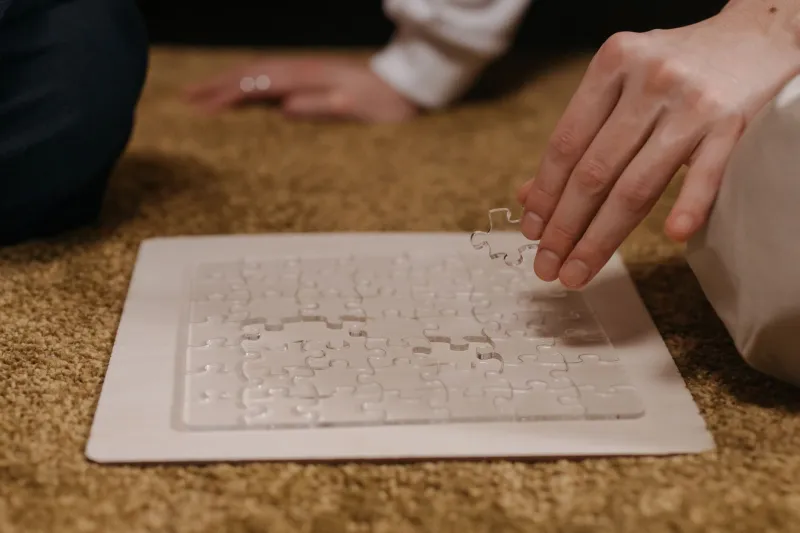
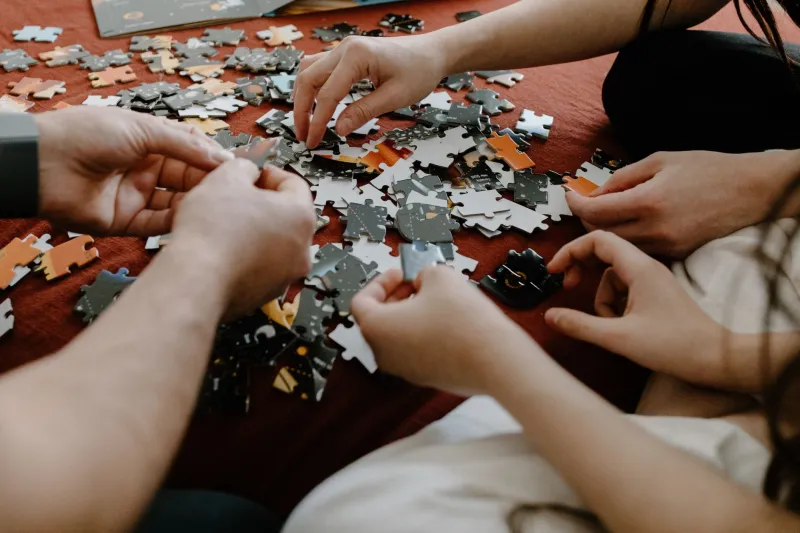
Let's say you've spent the last six months absolutely crushing escape rooms, dominating your Wordle streak, and finishing cryptic crosswords that would make most people throw their phone across the room. You're sharp. You're tuned in. You notice things other people miss.
And then one day, your coworker laughs a little too long at something that wasn't that funny, and your brain quietly files it away as suspicious.
Welcome to what puzzle enthusiasts half-jokingly call the Puzzle Curse — that creeping moment when the mental toolkit you've built for cracking riddles starts applying itself to situations that really don't need cracking at all.
Your Brain Doesn't Know When to Clock Out
Here's the thing about getting good at puzzles: your brain doesn't compartmentalize the way you'd hope. When you train yourself to spot patterns, decode subtle signals, and question surface-level information, those skills don't stay neatly inside the game. They bleed into everything.
Psychologists call this cognitive generalization — the brain's tendency to apply learned strategies beyond their original context. It's the same reason a chess player might mentally map out social dynamics at a party, or why a seasoned mystery reader starts predicting plot twists in real conversations.
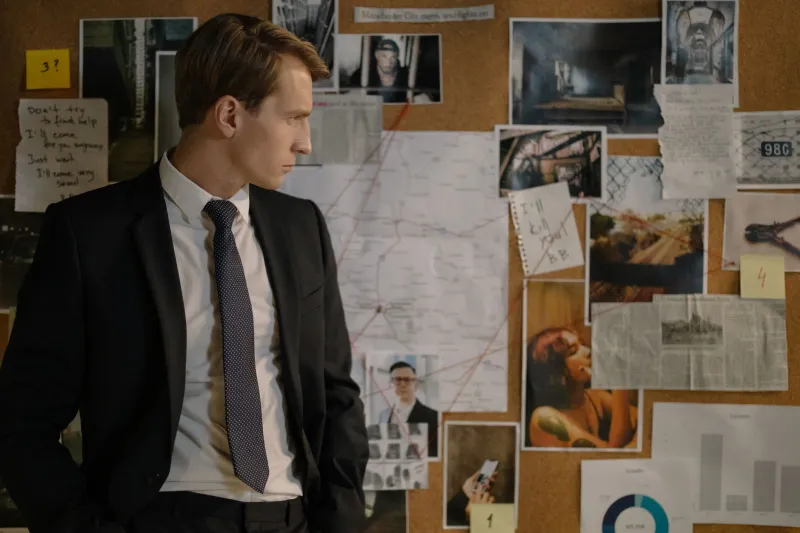
For puzzle lovers, this generalization can go sideways fast. You start reading subtext into text messages. You notice that a friend paused before answering a simple question and suddenly you're running a mental interrogation. A store that rearranges its layout becomes, in your head, a deliberate attempt to manipulate foot traffic. None of this is irrational, exactly. It's just your pattern-recognition engine running hot in an environment that doesn't actually need it.
The Apophenia Trap
There's a clinical word for finding meaningful connections in unrelated things: apophenia. In mild doses, it's actually what makes puzzle solvers so effective. You see a potential link between two clues that nobody else noticed — that's apophenia working in your favor.
But crank up the sensitivity too high, and it starts generating false positives everywhere. Suddenly the number 47 showing up twice in your week feels like a signal. The fact that your neighbor took out the trash at an unusual time feels like it means something. You're not losing your mind — you're just running a very powerful pattern-detection system with no off switch.
Dr. Marcia Keller, a cognitive behavioral psychologist based in Chicago, describes it this way: "People who engage heavily in mystery and puzzle content are essentially doing repeated reps of a specific mental exercise. The brain adapts. It becomes more sensitive to anomalies. The problem is that anomalies exist everywhere in everyday life, and most of them are completely meaningless."
In other words, your puzzle brain is doing exactly what you trained it to do. The issue is context.
When the Detective Mode Becomes the Default Mode
There's a difference between being observant and being hypervigilant. Observant means you notice things. Hypervigilant means you can't stop noticing things, and you can't stop assigning weight to what you notice.
For serious puzzle enthusiasts — the kind who spend weekends at mystery dinners, binge true crime podcasts, and have a shelf full of logic puzzle books — the line between those two states can get blurry. And once you cross it, everyday interactions start to feel like scenes from a game you didn't agree to play.
This isn't just anecdotal. Research on hypervigilance suggests that when the brain is chronically primed to detect threats or hidden information, it can create a low-grade anxiety that's hard to shake. You're not scared, exactly. You're just... watching. Always watching.
The irony is that this is the exact mindset that makes you unstoppable inside a puzzle room and quietly exhausting outside of one.
The Social Cost Nobody Talks About
Here's where the Puzzle Curse gets genuinely inconvenient. When you're wired to read between the lines, you sometimes read things that aren't there — and then act on them.
You might confront a friend about something they "obviously" meant when they didn't mean it at all. You might come across as guarded or suspicious to people who have no idea why you're looking at them like they're a cipher to decode. Relationships thrive on a certain amount of comfortable ambiguity, and puzzle brains aren't always great at tolerating comfortable ambiguity.
Some enthusiasts describe a weird social fatigue that builds up over time. One escape room regular from Austin put it bluntly in an online forum: "I started noticing that I was treating normal conversations like interrogations. I wasn't trying to be paranoid. I just couldn't turn it off."
Sound familiar?
Tricks for Keeping the Curse in Check
The good news is that recognizing the pattern is already half the battle — which, honestly, is very on-brand for the puzzle community.
Build a mental "game zone." Deliberately signal to your brain when it's time to engage puzzle mode and when it isn't. Some enthusiasts use a physical ritual — putting on a specific playlist, sitting in a designated spot — to frame puzzle time as its own context. This helps reinforce the boundary between game logic and real-world logic.
Practice tolerating ambiguity. Not every weird moment means something. Start small: when you notice your brain flagging something as suspicious, give it a 10-second pause before engaging. Ask yourself, "Is there a simpler explanation?" Spoiler: there almost always is.
Talk to other puzzle people. Community helps normalize the experience. Knowing that your mystery-obsessed friends feel the same way takes the edge off. The TricksClues community is full of people who've wrestled with exactly this — and most of them have figured out how to laugh about it.
Redirect the instinct. Channel that pattern-hungry brain into a new puzzle rather than letting it loose on your inbox. When you feel the urge to analyze something mundane, give your brain an actual challenge to chew on instead.
Consider what you're consuming. A steady diet of true crime, conspiracy-adjacent content, and high-stakes mystery fiction will keep your threat-detection system dialed up. Balance it out with content that's lighter, more playful, or completely unrelated to mystery.
The Curse Is Also the Gift
None of this is meant to scare you off puzzles. Far from it. The same instincts that make you second-guess your neighbor's trash schedule also make you the person who spots the hidden door in an escape room that everyone else walked past six times. That's not a bug. That's the whole point.
The Puzzle Curse isn't really a curse at all — it's just an overeager brain that loves its job a little too much. And honestly? That's a pretty good problem to have.
The trick — like any good puzzle — is knowing when you've found the answer and when you need to step back, breathe, and accept that sometimes a coincidence is just a coincidence.
Now go solve something.