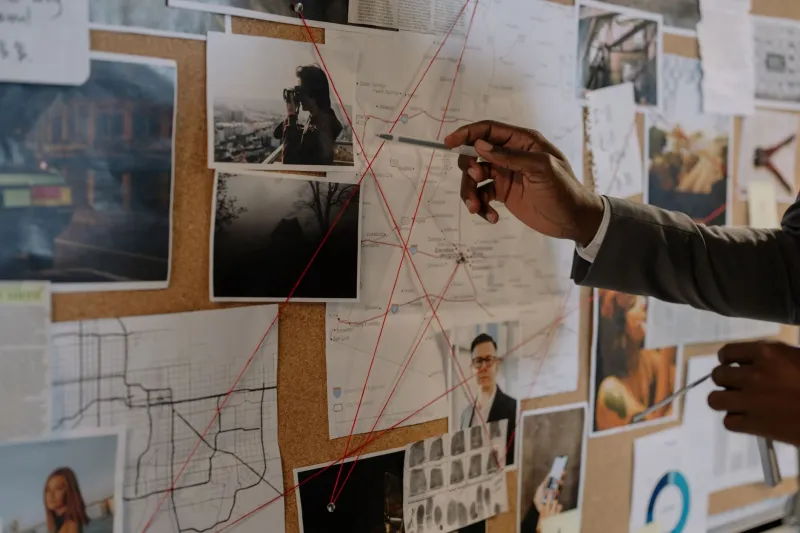
Cracking the Case in Front of You While Missing the One Behind You
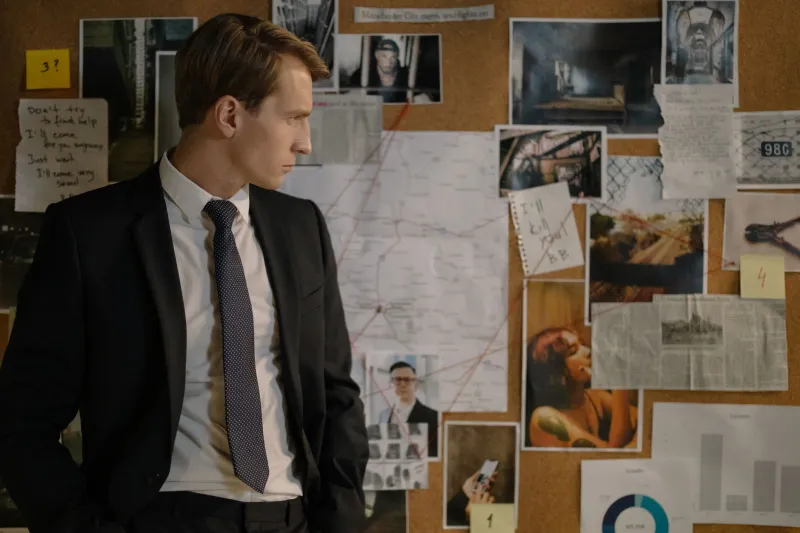
There's a famous experiment most psychology students encounter early on. Participants are asked to watch a video and count how many times a group of players passes a basketball. Midway through, a person in a gorilla suit walks right through the frame, thumps their chest, and wanders off. Nearly half of all viewers never see it. Not because they're careless. Because they're focused.
If you've ever spent hours locked onto a crossword, a logic puzzle, or an escape room challenge, you already know the feeling. The rest of the room dissolves. Your coffee goes cold. Someone speaks to you and you hear sound but not words. That laser focus feels like a superpower — and in many ways, it is. But there's a cost nobody talks about nearly enough.
The Brain Can Only Hold the Door Open for So Much
Here's the uncomfortable truth about human attention: it isn't infinite, and it isn't evenly distributed. Cognitive scientists call this selective attention — the brain's method of prioritizing certain inputs while actively suppressing others. When you're deep in problem-solving mode, your prefrontal cortex essentially puts up a velvet rope. Only puzzle-relevant information gets through.
This isn't a flaw in your wiring. It's actually an elegant survival mechanism. Early humans needed to focus intensely on tracking prey without getting distracted by every rustling leaf. The problem is that modern life — and especially the puzzle-obsessed life — asks your brain to do something it wasn't fully designed for: stay simultaneously broad and deep.
Research published in journals studying inattentional blindness consistently shows that the harder a task demands your concentration, the more dramatically your peripheral awareness drops. You're not just ignoring the gorilla. You're neurologically incapable of seeing it in that moment.
Famous Cases Where Tunnel Vision Changed Everything
The puzzle community loves a good true crime deep dive, and the history of detective work is littered with examples of brilliant investigators who solved one piece of a case while completely missing another hiding in plain sight.
Take the years-long investigation into the Zodiac Killer in California during the late 1960s and '70s. Law enforcement and amateur codebreakers poured enormous energy into deciphering the killer's elaborate encrypted letters — and some of those ciphers were eventually cracked decades later. But while attention was riveted on the cryptographic puzzle, investigators repeatedly overlooked behavioral and geographic patterns that modern profilers now consider relatively straightforward. The cipher was the puzzle. The surrounding evidence became invisible noise.
Similarly, in countless cold cases that have been reopened and solved in recent years, detectives have admitted that original investigators were so locked onto a primary suspect that contradictory evidence — fingerprints, witness statements, alibi confirmations — was either dismissed or simply never registered. The brain had already decided what it was looking for.
This isn't a knock on those investigators. It's a window into how human cognition actually operates under pressure.
The Puzzle Enthusiast's Specific Vulnerability
If you're someone who regularly engages with brain teasers, escape rooms, mystery games, or logic challenges — congratulations, you've trained your focus muscle to be genuinely impressive. You can hold complex rule sets in working memory. You can recognize patterns faster than most people. You're comfortable sitting with ambiguity until a solution crystallizes.
But here's the paradox that doesn't get discussed at puzzle meetups: the better you get at drilling down, the more you may be inadvertently training yourself to ignore the peripheral. You're building a spotlight when sometimes you need a floodlight.
Puzzle veterans often report a specific frustration — they'll spend forty minutes on a single locked box in an escape room, convinced the solution is right there, while their team discovers three other clues that completely reframe the challenge. The expert became the bottleneck because expertise told them to go deeper, not wider.
How to Train Your Brain to Stay Wide While Going Deep
The good news is that selective attention isn't a fixed setting. You can deliberately build habits that keep your peripheral awareness alive even when you're in full problem-solving mode. Think of it as developing a mental split-screen.
Set intentional checkpoint intervals. Every ten to fifteen minutes during a puzzle session, physically stop and ask yourself: What haven't I looked at in a while? This isn't about breaking focus — it's about scheduling brief, deliberate resets. Competitive escape room teams actually use this technique tactically, assigning one team member the rotating role of "wide lens," whose job is to periodically scan the whole room rather than any single puzzle.
Name what you're ignoring. Sounds counterintuitive, but actively identifying the things you're choosing not to focus on keeps them in loose working memory. Before you commit deeply to one thread of a mystery, spend sixty seconds cataloging everything else you've noticed. You're not solving those yet — you're just keeping the gorilla visible.
Rotate your entry point. If you always approach puzzles the same way — starting with what seems most complex, or always working left to right — you're reinforcing the same attentional pathways. Deliberately starting from a different angle forces your brain out of its habitual filtering and often reveals elements you'd otherwise screen out automatically.
Practice "soft eyes" in everyday life. This is a technique borrowed from performance athletics. Instead of focusing sharply on a single point, consciously relax your gaze to take in a wider field of vision. Apply the same principle cognitively when you're reading a mystery novel or watching a crime documentary — resist the pull toward the most obvious suspect and periodically ask what the story is not emphasizing.
The Paradox Is Actually the Point
Here's what makes this whole thing fascinating from a puzzle-lover's perspective: the very trait that makes you exceptional at solving mysteries is the same trait that can make you oblivious to the mystery unfolding right beside you. Focus is simultaneously your greatest tool and your most reliable blind spot.
The best solvers — whether they're cracking ciphers, navigating escape rooms, or working through a particularly devious riddle — aren't just deep divers. They're deep divers who've learned to surface regularly, look around, and then plunge back in. They've made peace with the paradox.
So next time you're completely absorbed in a puzzle and someone asks if you noticed something obvious happening nearby — don't be embarrassed. You were probably counting basketballs. The trick is learning to also watch for the gorilla.
And honestly? Spotting both at once is the real puzzle worth mastering.