Five Letters, Five Minutes, Five Million Players: The Science Behind Why Daily Puzzle Games Completely Took Over America
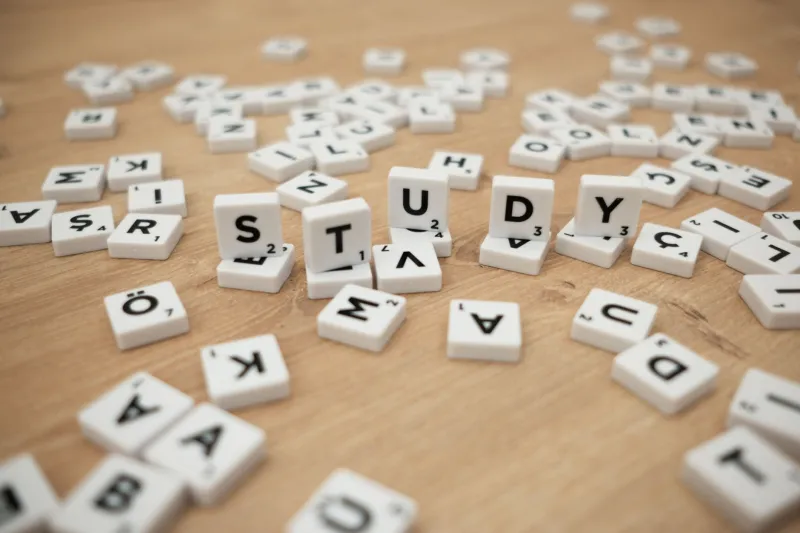
Somewhere around early 2022, a weird thing started happening on American Twitter. Grids of green, yellow, and gray squares began flooding timelines with zero context. People were sharing results without explaining what they meant. It looked like a code — because it basically was one.
Wordle had arrived, and it was about to do something no casual browser game had managed in years: make puzzle-solving genuinely cool again.
At its peak, Wordle was pulling in over three million daily players. The New York Times bought it for a reported seven-figure sum. And it opened the floodgates for a wave of daily puzzle games — Connections, Spelling Bee, Mini Crossword, Strands — that have since become embedded in the daily routines of tens of millions of Americans. We're talking about people who set their phone alarms specifically so they can play a word puzzle before coffee.
How did this happen? And more interestingly — why does it keep happening, every single day?
The Daily Ritual Is the Point
Here's what separates Wordle-style games from every other mobile game on your phone: the artificial scarcity. One puzzle. Per day. That's it. You can't binge it. You can't unlock more levels by watching an ad. When you're done, you're done until tomorrow.
For game designers, this constraint looks like a limitation. In practice, it turned out to be the secret weapon.
"Scarcity creates value," explains the logic that puzzle designers have been quietly applying for decades. Crossword constructors at major newspapers have always understood this — the daily crossword isn't just a puzzle, it's an appointment. The NYT Games suite essentially took that appointment-based psychology and turbocharged it with social sharing and streaks.
Streaks, in particular, are a masterclass in behavioral design. Once you've solved a puzzle seventeen days in a row, day eighteen isn't optional anymore — it's a protection mission. Your brain has reframed the activity from "fun thing I do" to "thing I must not lose." Loss aversion, one of the most well-documented quirks of human psychology, is doing the heavy lifting here. You're not just playing to win. You're playing to not break something.
What's Actually Happening in Your Brain
Let's get into the neuroscience for a second, because it genuinely explains a lot.
When you correctly guess a Wordle word — especially on a tricky day when you were down to your last attempt — your brain releases dopamine. Not a huge flood of it, but a clean, satisfying hit. The kind that comes from resolving uncertainty. From pattern completion. Your brain, at a very deep level, is wired to find patterns and then feel rewarded when those patterns click into place. It's the same mechanism that made our ancestors good at tracking animals and reading weather — and now it's making you really good at knowing that the answer probably has two E's.
What makes puzzle games particularly effective at triggering this response is what researchers call "variable reward scheduling." Some days Wordle is a breeze and you get it in two. Other days you're sweating through guess five wondering if the answer is really GLYPH. That variability keeps your brain engaged in a way that predictable challenges don't. You never know if today's puzzle is going to be easy or genuinely humbling, and that uncertainty is compelling.
Connections — the NYT game where you sort sixteen words into four hidden categories — adds another layer by incorporating misdirection. The puzzle is specifically designed to make you think certain words belong together when they don't. The "obvious" grouping is often a trap. Solving it requires you to hold multiple possible interpretations in your head simultaneously, which is a cognitively demanding task that most people find weirdly pleasurable once they get the hang of it.
The Puzzles That Keep You Coming Back vs. the Ones That Feel Like Homework
Not all daily puzzle games have cracked the code, though. For every Wordle, there are a dozen apps that launched with fanfare and quietly disappeared from home screens within a month.
The difference usually comes down to one thing: fairness.
A puzzle feels like play when the challenge comes from the puzzle itself — from the cleverness of the design, from your own knowledge gaps, from the satisfying friction of working something out. It starts feeling like homework the moment the difficulty feels arbitrary, unfair, or designed to frustrate rather than challenge.
Spelling Bee walks this line carefully. The game gives you seven letters and asks you to make as many words as possible, including one that uses all seven. There's always a solution. The letters are always chosen to make finding words genuinely possible. When you're stuck, it doesn't feel like the game cheated you — it feels like you haven't thought of it yet. That's a crucial distinction.
Games that rely on obscure trivia, regional knowledge, or vocabulary that most players simply won't have tend to create frustration rather than engagement. The puzzle equivalent of a riddle where the answer is a word nobody uses anymore — technically correct, emotionally unsatisfying.
The Social Layer Nobody Predicted
What caught everyone off guard about Wordle — including, reportedly, its original creator — was how intensely social it became.
The shareable result grid was a stroke of accidental genius. Those colored squares communicated something meaningful (how you did, the shape of your solution path) without spoiling anything for people who hadn't played yet. It was the rare social media share that was genuinely informative, slightly competitive, and completely spoiler-free. People could brag without ruining it for their friends.
This turned a solitary activity into a communal one almost overnight. Office Slack channels filled with Wordle results. Family group chats got a new daily topic. The puzzle became a conversation starter in a way that was low-stakes and inclusive — you didn't have to be a puzzle genius to participate, just willing to try.
That social dimension has become a core part of what the NYT Games suite sells now. Connections in particular generates enormous amounts of online discussion because the four categories are often themed in ways that feel clever or surprising — and people love both sharing their victories and commiserating about the category they completely whiffed on.
What This Moment Actually Means
Step back and the daily puzzle phenomenon starts to look like something more than just a gaming trend. It's a quiet rebellion against the overwhelming, infinite scroll nature of most digital content.
In a media landscape where everything is designed to keep you engaged indefinitely — where the next video autoplays and the feed never ends — a game that tells you "you're done for today" is genuinely countercultural. It respects your time in a way that feels almost radical.
And the puzzle format itself carries something meaningful. Every day, millions of Americans sit down with a problem that has a solution. Not a think-piece to scroll through or a notification to respond to — a puzzle, with an answer, that they can either find or not find. In five minutes or less.
For a country that spends most of its waking hours dealing with problems that are enormous, complex, and deeply resistant to easy answers, there's real comfort in that. The grid resets at midnight. Tomorrow there's a new puzzle. And somewhere out there, someone already knows what the answer is — you just have to figure it out.