Once a Solver, Always a Solver: The Surprising Reasons People Are Coming Back to Puzzles
The Clue That Started It All Over Again
For Marcus, a 41-year-old project manager from Columbus, Ohio, it was a rainy Saturday and a half-finished crossword book left behind by his college-aged daughter. For Janelle, a 38-year-old nurse from Austin, it was a Wordle link texted by a coworker that she "just wanted to try once." For Derek, a 52-year-old teacher from Portland, it was an escape room birthday party he almost skipped.
Different triggers, same destination: back at the puzzle table.
Across the country, people who had walked away from brain teasers — sometimes for years, sometimes for decades — are returning to the hobby in unexpected numbers. And what's striking isn't just that they're back. It's how differently they're showing up this time.
Why Did They Leave in the First Place?
Before we talk about the comeback, it helps to understand the exit. Most former solvers didn't quit because they stopped loving puzzles. Life just got louder.
Careers, kids, mortgages, the general chaos of adulting — these things have a way of crowding out hobbies that feel "optional." Puzzles, unlike binge-watching a show or doomscrolling social media, require active mental engagement. When you're running on fumes, that bar can feel unreachable.
There's also a confidence angle. A lot of people quietly step away from puzzles after hitting a difficulty wall they couldn't break through. Nobody likes feeling stuck, especially in a hobby that's supposed to be fun. So they set the puzzle down "for now" — and now quietly stretched into years.
What's Pulling Them Back
Something shifted. Actually, a few things shifted at once.
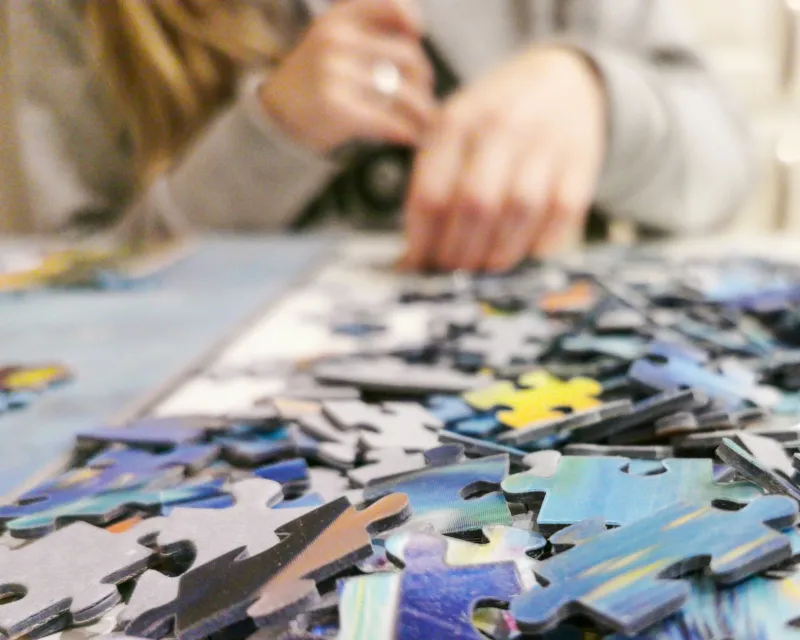
First, the pandemic scrambled everyone's relationship with time and leisure. Stuck at home with fewer social outlets, millions of Americans rediscovered hobbies they'd neglected. Jigsaw puzzle sales reportedly surged by over 300% in early 2020. Crossword app downloads spiked. Escape room companies pivoted to virtual formats and pulled in audiences who'd never considered the hobby before.
But the comeback didn't stop when the world reopened. If anything, it accelerated — because people had been reminded of something important: puzzles feel good. Not just as a distraction, but as a genuine source of accomplishment in a world that often feels chaotic and unresolvable.
Second, the puzzle landscape itself transformed. The old image of puzzles — dense newspaper crosswords, thousand-piece jigsaws of autumn forests, logic grids for "serious" hobbyists — gave way to something far more accessible and social. Wordle made a daily puzzle ritual feel like a shared cultural moment. Apps like The New York Times Games suite, Connections, and a wave of indie mystery puzzle platforms turned brain teasers into bite-sized, low-stakes fun.
"I never thought of myself as a puzzle person," says Janelle. "But Wordle didn't feel like homework. It felt like a game I could finish before my coffee got cold. That changed everything for me."
The Adult Advantage (and the Adult Trap)
Here's what's genuinely interesting about returning solvers: they're not the same people who left.
Life experience turns out to be surprisingly useful in puzzle-solving. Adults who've spent years navigating complex workplace dynamics, managing relationships, or problem-solving on the fly tend to bring lateral thinking skills that pure logic can't replicate. They're better at reading context, tolerating ambiguity, and knowing when to abandon a dead-end approach — all critical tools in any serious solver's kit.
Marcus noticed this immediately. "When I was in my twenties, I'd get tunnel vision on puzzles. One wrong assumption and I'd be stuck for an hour. Now I catch myself stepping back more naturally. I've learned that sometimes the obvious answer is a trap."
That instinct — to question the obvious — is something cognitive researchers associate with what's called "schema flexibility," the ability to reframe a problem when your first mental model fails. Adults tend to develop this more robustly than younger solvers, which means returning puzzle enthusiasts often find themselves performing better than they expected.
But there's a flip side. Adult brains also come loaded with ingrained habits and assumptions. The same experience that helps you read a mystery puzzle's red herrings can make you overconfident in your initial read. Returning solvers sometimes have to actively unlearn the certainty that real-world expertise builds up — and that's a puzzle in itself.
Nostalgia as a Gateway Drug
For many returning solvers, the emotional pull is just as important as the cognitive one. Puzzles carry memories. The Sunday crossword with a parent. The riddle book from a road trip. The logic puzzle magazine in a waiting room that somehow made an hour disappear.
Nostalgia is a powerful re-entry point, but researchers who study recreational rekindling note that it rarely sustains long-term engagement on its own. What keeps returning solvers hooked isn't the memory of puzzles — it's rediscovering the actual feeling of solving one.
There's a neurological reason for that. Successfully cracking a puzzle triggers a small but real dopamine release. Your brain registers it as a win. And wins, however small, are addictive in the best possible way. Once that loop reactivates, nostalgia steps aside and genuine engagement takes over.
Derek put it simply: "I came back because it reminded me of being a kid. I stayed because I realized I'm actually better at this now than I ever was."
A Different Kind of Player
What separates returning solvers from first-timers isn't just skill — it's expectations. People coming back to puzzles after a long absence tend to be less competitive with themselves, more willing to sit in the discomfort of not-knowing, and more focused on the experience than the outcome.
That shift matters more than it sounds. Puzzle enjoyment research consistently shows that the most satisfied solvers are those who can stay curious during the process rather than fixating on the solution. In a strange way, the years away may have given returning enthusiasts exactly the perspective they needed to enjoy puzzles more fully.
They've also got better tools. Between dedicated apps, online communities, puzzle subscription boxes, and the explosion of mystery-themed entertainment (think true crime podcasts, interactive fiction, and immersive escape experiences), today's returning solver has access to a puzzle ecosystem that barely existed a decade ago.
The Clue You Left Behind
If you're someone who used to love puzzles and quietly stopped — maybe there's a reason you're reading this right now.
The thing about puzzles is that they wait. That half-finished crossword, that unsolved riddle, that mystery you never quite cracked — they don't go anywhere. And apparently, neither does the part of your brain that loved working on them.
The comeback, it turns out, was always just one clue away.