The Waiting Room Is the Puzzle: Why We Crave Answers and Can't Stand the Clue
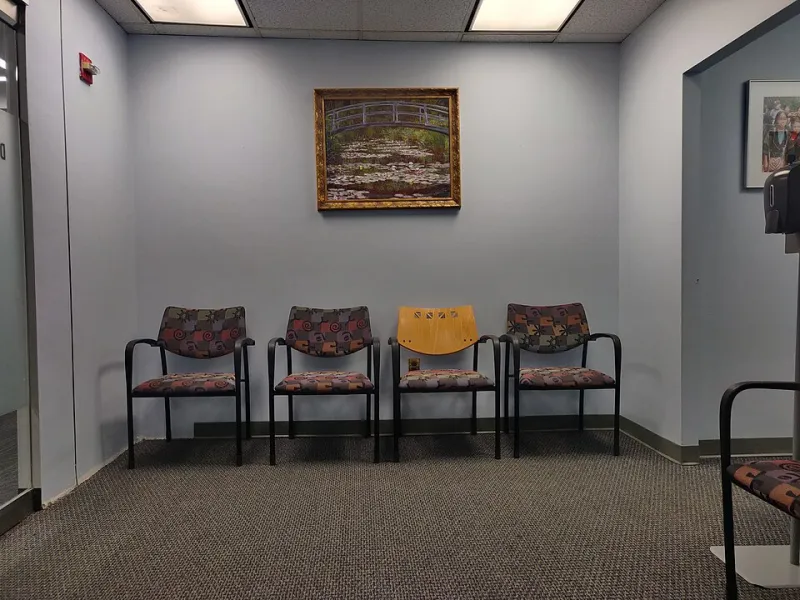
Photo: Kurt Kaiser, CC0, via Wikimedia Commons
There is a particular kind of American impatience that shows up around 11 p.m., when the true-crime documentary has one episode left and the answer is still 47 minutes away. We want the killer identified. We want the escape room lock to click. We want the riddle solved before the group chat moves on. What we do not want, apparently, is the messy middle—the part where the clue is in our hand and the answer is not.
That tension sits at the center of the 2026 puzzle boom. We have more mystery content than ever: streaming docs, boxed puzzle subscriptions, escape rooms in strip malls, brain teasers on every social feed. But our tolerance for ambiguity seems to be shrinking at the same rate. We treat the middle of a puzzle as a delay instead of the actual game. That is a problem, because the middle is where the solving happens.
We Love the Clue, Not the Waiting
A clue is a hit of possibility. It feels productive. It gives us something to hold. Waiting with that clue, though, is uncomfortable. The brain wants closure, and a partial answer registers as an open loop. In a true-crime story, we binge to the verdict. In an escape room, we yank on locks before we understand the code. In a brain teaser, we reach for search. None of those moves are evil. They are just impatience wearing a productive costume.
The strange part is that we often describe this as being bad at puzzles. Usually it is not a logic problem. It is a tolerance problem. The person who solves the room is not always the smartest one in it. They are often the one who can sit with a clue for two extra minutes without declaring the puzzle broken.
Why the Middle Feels Like Failure
The middle of a puzzle is full of bad drafts. You have three theories, and two are wrong. You have a code that almost works. You have a clue that seems important but has no home yet. For a brain trained on instant feedback, that state feels like failure. It is not. It is the normal weather of a mystery.
This is where a lot of group puzzles fall apart. Someone gets quiet. Someone else starts brute-forcing combinations. A third person announces that the room is unfair. The group has not run out of clues. It has run out of patience. The same thing happens at dinner-party mysteries and at home with a riddle on the fridge. The answer is close, but the discomfort is closer.
The 2026 Patience Deficit
We are not lacking puzzles in 2026. We are lacking practice at being unresolved. Phones train us to exit uncertainty fast. Spoiler culture trains us to want the ending before the story earns it. Even puzzle apps often nudge us toward hints after a short stall. None of this makes us worse people. It just makes the middle feel longer than it is.
The good news is that patience is not a personality trait. It is a skill, and like most skills it improves with reps. You do not need to become a monk or throw your phone into a lake. You need small, repeatable chances to stay with a clue before you solve it.
Rebuilding the Muscle Without Becoming a Monk
Start with a ten-minute rule. Pick one puzzle—a riddle, a logic grid, a small escape-room-style box—and commit to ten minutes of no hints, no search, no asking a friend. Write down what you know. Write down what you do not know. Then keep going. If you are still stuck at ten minutes, take a hint. You are not cheating. You are training.
Try a clue journal. Before you test an answer, list three possible interpretations of the clue. This slows the jump from clue to conclusion and gives your brain something to compare. In a group, assign a quiet job: one person tracks clues, one person tests theories, one person watches the clock. The job is not to solve faster. The job is to keep the group from panicking in the middle.
Play cooperative puzzles more often than competitive ones. Competition rewards speed and punishes visible uncertainty. Cooperation rewards sharing half-formed ideas, which is exactly what the middle of a puzzle needs. If you are hosting, build in a thirty-second pause after each new clue. No phones, no hints, no talking over each other. Just let the clue sit. It is awkward for about twenty seconds. Then someone notices something.
A Small Experiment for Your Next Mystery
At your next escape room, mystery dinner, or family brain teaser, try a patience captain. This person does not solve. They watch the group. When the room gets loud or someone reaches for a hint, the captain calls a thirty-second reset. Everyone states one thing they know and one thing they are unsure about. Then the group starts again.
It sounds soft. It works. The reset interrupts the panic loop and gives the quiet clues a chance to surface. It also makes room for the people who were thinking slowly but correctly. Some of the best solves happen after the group stops performing confidence and starts tolerating confusion.
The Payoff Is Not Speed
The point of patience is not to become a slower solver. It is to become a solver who can stay in the uncomfortable middle long enough to see the pattern. That skill travels. It helps with escape rooms, yes, but also with real mysteries, complicated decisions, and conversations that do not resolve in one sitting. In 2026, the most useful puzzle skill might be the least flashy one: the ability to hold a clue without demanding an answer. The answer can wait. The clue deserves a minute.