The Loon, the Lake, and the Legend: Minnesota's State Animal and the Riddles It Hides
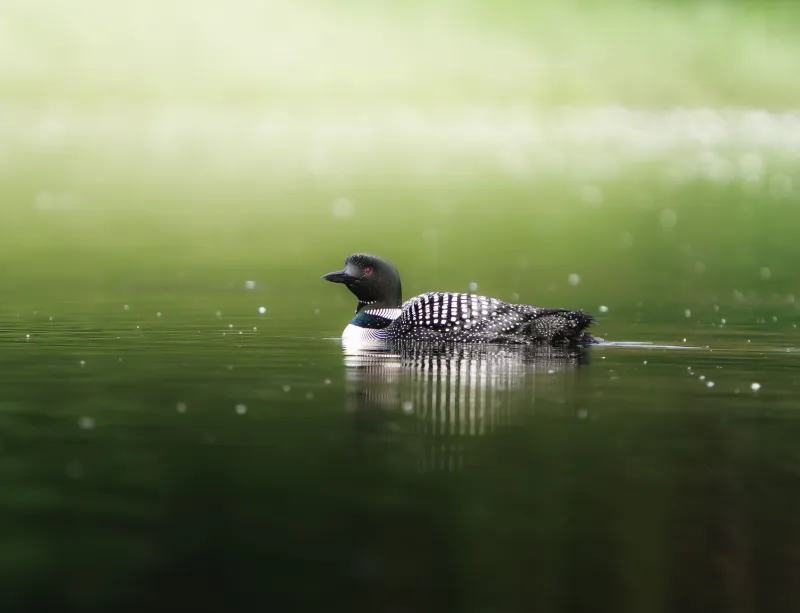
If you've ever stood at the edge of a Minnesota lake at dusk and heard a sound that made the hair on the back of your neck stand up — congratulations, you've just been spooked by the state animal. Minnesota's official state animal is the Common Loon (Gavia immer), and calling it "common" might be the most misleading label in all of American wildlife.
This bird is anything but ordinary. It's ancient, it's eerie, it's almost supernaturally adapted to its environment — and once you start pulling on the threads of what makes a loon a loon, you realize this creature is basically a walking, diving, haunting riddle.
So Why the Loon?
Minnesota officially adopted the Common Loon as its state bird in 1961, but the loon's connection to the Land of 10,000 Lakes goes back way further than any legislative vote. Indigenous communities across the Great Lakes region held the loon in high cultural and spiritual regard for centuries. The Ojibwe, for example, considered the loon a symbol of peace and tranquility — though anyone who's heard its midnight wail might respectfully disagree on the "tranquility" part.
Wait — state bird? Yes. Here's the first puzzle: Minnesota's state animal and state bird are the same creature. The loon holds both titles, which is either wonderfully efficient or a little confusing depending on how you look at it. Either way, that's peak Minnesota.
The Four Calls of the Loon: A Cipher Worth Cracking
If you want to understand loons, you have to understand their calls. There are four distinct vocalizations, and each one is basically a coded message:
- The Wail — That long, haunting sound you've definitely heard in every horror movie set near water. Loons use this to communicate across long distances, almost like a foghorn signal.
- The Tremolo — A rapid, stuttering call that signals alarm or disturbance. If a loon is trilling at you, you've gotten too close.
- The Yodel — Only male loons do this one, and it's a territorial declaration. Think of it as a loon saying, "This lake? Mine."
- The Hoot — Short and quiet, used between family members. It's basically the loon equivalent of a text message.
For puzzle lovers, this four-call system is genuinely fascinating. Each call encodes different information about the loon's emotional state, location, and social situation. Early researchers took years to decode the full meaning behind these vocalizations — and some nuances are still being studied today.
Built Like a Mystery
The loon's physical design is almost suspiciously perfect for its environment, which makes it feel like something engineered rather than evolved. A few details that puzzle biologists and delight nature nerds:
Their bones are solid. Most birds have hollow bones to reduce weight for flight. Loons have dense, solid bones that help them dive deep — sometimes reaching depths of 200 feet. The trade-off? They need a long runway of open water to take off. A loon cannot launch from land or from a small pond. It's a constraint built right into the design.
Their eyes change color. During breeding season, loon eyes shift from a dull gray to a vivid, almost glowing red. Scientists believe the red pigmentation helps them see better underwater. It also makes them look like something out of a supernatural thriller.
They migrate but stay secretive about it. Minnesota loons head south for the winter, typically to the Gulf Coast or the Atlantic seaboard. But they're notoriously hard to track. For years, researchers struggled to follow their exact migration routes — it wasn't until the development of lightweight GPS transmitters that scientists started cracking the full picture of where Minnesota's loons actually go.
The Loon Population Puzzle
Here's where things get a little more serious — and a little more like a real mystery worth solving. Minnesota is home to roughly 12,000 Common Loons, the largest breeding population in the contiguous United States outside of Alaska. That sounds like a lot, but loon populations are sensitive indicators of environmental health.
Loons sit near the top of the aquatic food chain, which means toxins like mercury accumulate in their bodies at higher concentrations than in smaller species. Researchers have been using loon health data for decades as a kind of environmental report card for Minnesota's lakes. When loon numbers drop in a region, it's often a signal — a clue — that something is off in the water.
In that sense, the loon isn't just Minnesota's state animal. It's Minnesota's most important environmental detective.
Loon Trivia Worth Knowing (and Dropping at Your Next Trivia Night)
If you're the kind of person who loves having the answer ready before anyone else does, here are a few loon facts that tend to stump even die-hard Minnesota residents:
- Loons can live up to 30 years in the wild.
- They typically mate for life — but will find a new partner if one dies or fails to return to the breeding territory.
- Loon chicks can swim almost immediately after hatching, but they ride on their parents' backs for the first few weeks of life.
- The word "loony" (as in crazy) is believed by some etymologists to derive from the loon's erratic, haunting calls — though other origins have been proposed.
- A group of loons is called an asylum. Yes, really.
Why Minnesota Got It Right
Every state has a state animal, and most of them are fine choices — dignified, regional, perfectly reasonable. But Minnesota's loon feels like a deliberate selection by someone who understood that a state symbol should be a little mysterious. A little unsettling. Something that makes you lean in and ask questions.
The loon wails across the water at 2 a.m. and you don't fully know why. It dives below the surface and disappears for minutes at a time. It stares at you with those red eyes and gives nothing away.
For puzzle lovers and mystery fans, that's not just a bird. That's a whole vibe.
Next time you're in Minnesota — or even just listening to a nature documentary — pay attention when the loon calls. It's leaving you clues. Whether you can decode them is another story entirely.