Can't Just Watch: What Happens When Your Puzzle Brain Hijacks Every Story You Try to Enjoy
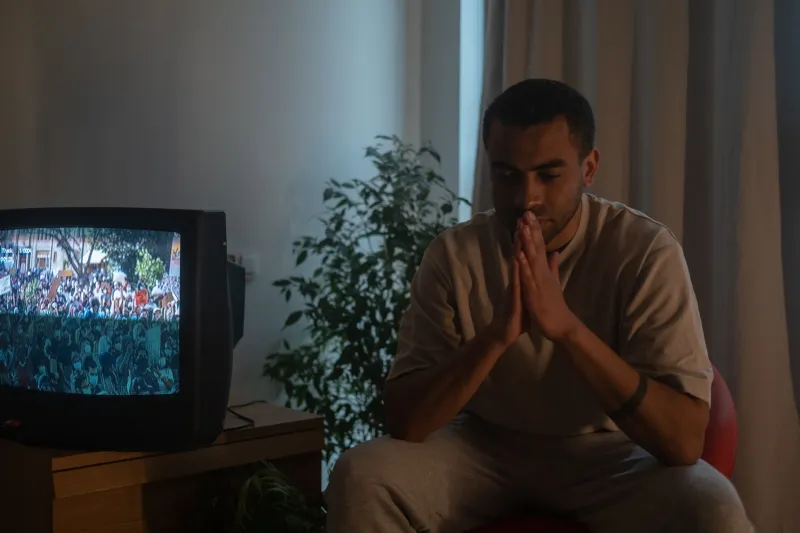
You're twenty minutes into a mystery series when your roommate leans over and whispers, "I already know who did it." You haven't even met all the suspects yet. But they're not bragging — they genuinely couldn't stop themselves from piecing it together. The story wasn't entertainment. It was a puzzle to be cracked, and their brain cracked it before the writers wanted them to.
If that sounds familiar, you're not alone. A growing number of puzzle enthusiasts, escape room veterans, and riddle obsessives report that they've lost the ability to simply sit with a story. Instead of experiencing it, they're auditing it — scanning for inconsistencies, cataloging clues, and predicting outcomes with the detached focus of a forensic analyst.
The question is: is that a superpower, a glitch, or both?
The Compulsion to Decode
Dr. Rachel Nweze, a cognitive psychologist who studies problem-solving behaviors, describes what she calls "analytical intrusion" — the involuntary application of puzzle-solving logic to non-puzzle situations.
"The brain is fundamentally a pattern-recognition machine," she explains. "For people who spend a lot of time training that system — through escape rooms, logic puzzles, mystery games — the threshold for triggering that mode gets lower and lower. Eventually, it fires in contexts where you didn't ask it to."
In other words, your brain stops waiting for permission. A thriller novel, a crime drama, even a rom-com with a twist ending — all of it becomes raw data to be sorted, weighted, and resolved. The enjoyment of not knowing gets replaced by the satisfaction of figuring it out, and those two experiences are not the same thing.
For dedicated solvers, this can feel like a superpower at first. Spotting the plot twist in episode two of a ten-episode series feels validating. It confirms that all that puzzle training paid off. But over time, many solvers describe a creeping dissatisfaction — a sense that they've somehow broken their own ability to be surprised.
The Spoiler You Made for Yourself
Marcos, a 34-year-old escape room designer based in Austin, TX, knows this feeling intimately. He's built puzzles professionally for six years, and in that time he says his relationship with fiction has fundamentally changed.
"I used to love crime novels. Now I read the first three chapters, figure out the structure, predict the killer, and then I'm just... waiting," he says. "It's like watching a magic trick when you already know how the trick works. The wonder is gone."
This isn't about intelligence. It's about cognitive habit. When you train your brain to immediately seek resolution — to treat ambiguity as a problem to eliminate — you start doing that everywhere. Ambiguity stops feeling like suspense and starts feeling like an incomplete task.
Dr. Nweze notes that this pattern shows up across different types of analytical thinkers, not just puzzle enthusiasts. "We see similar reports from people in law enforcement, data analysis, even certain kinds of engineering. Once your brain is wired to close loops, open loops feel uncomfortable rather than exciting."
Is It Hardwired or Trained?
Here's where it gets genuinely interesting: researchers aren't entirely sure how much of this is innate personality and how much is learned behavior.
Some people seem to arrive with what psychologists call a high "need for closure" — a personality trait associated with discomfort around uncertainty and a preference for clear, definitive answers. These individuals are naturally drawn to puzzles because puzzles always have answers. Unlike real life, unlike relationships, unlike ambiguous art — a puzzle resolves. And that resolution is deeply satisfying to a brain that craves it.
But the behavior can also be trained. Spend enough time in environments that reward fast, accurate pattern recognition, and your brain starts generalizing that approach. You're not born unable to enjoy a slow-burn mystery — you might have just practiced your way into impatience.
The good news? That means it's potentially reversible, or at least manageable.
Reclaiming the Experience
Some puzzle enthusiasts have found workarounds that let them re-engage with stories as stories rather than systems to be solved. A few strategies that actually seem to work:
Deliberately withhold your guess. When you feel the urge to predict a plot point, notice it — and consciously choose not to act on it. This isn't about suppressing your instincts. It's about building a pause between the impulse and the output.
Engage with medium that resists decoding. Literary fiction, experimental film, and non-linear storytelling are harder to "solve" because they're not built around solutions. Exposing your analytical brain to unresolvable material can retrain its expectations.
Watch with people who don't solve. Social context matters. When you're watching with someone who is genuinely surprised by a twist, that response is contagious. Borrowing someone else's wonder is a legitimate strategy.
Reframe the goal. Instead of asking "what happens next?", try asking "what does this moment feel like?" Shifting from predictive mode to experiential mode is a skill, and skills can be practiced.
Marcos has started doing something he calls "intentional naivety" when he watches new shows. "I give myself permission to be wrong. I deliberately propose bad theories, dumb guesses. It sounds silly, but it takes the pressure off the analytical brain and lets me just... watch."
The Deeper Clue
There's something worth sitting with here. The puzzle brain that can't stop solving is, at its core, a brain that's deeply uncomfortable with not knowing. And that discomfort — while it makes for a killer escape room player — can quietly hollow out the parts of life that require you to stay in the unknown a little longer.
Relationships. Creative work. Personal growth. These aren't puzzles with answers at the end. They're ongoing, unresolvable, beautifully messy experiences. A brain that can't tolerate open loops may be solving its way past the best stuff.
So maybe the real challenge isn't cracking the mystery on screen. Maybe it's learning to sit with the one that doesn't have a solution yet.
And for a puzzle obsessive, that might be the hardest brain teaser of all.