Fast Beats Deep: Is Competitive Speed-Solving Changing What It Means to Be Smart?
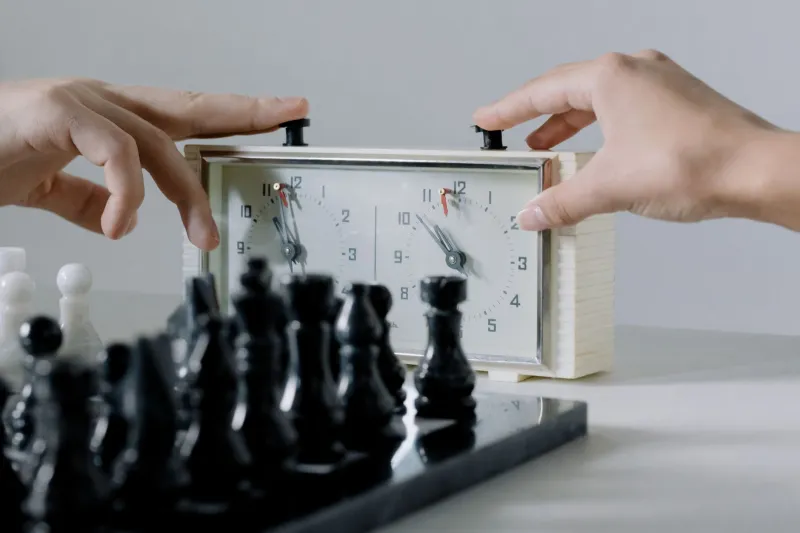
In 2023, Max Park solved a 3x3 Rubik's cube in 3.13 seconds. Let that land for a moment. Three-point-one-three seconds. The average adult human takes roughly that long to read the sentence you just read.
The crowd at the competition lost it. The clip went viral immediately. Millions of people who have never touched a Rubik's cube watched it with their jaws on the floor, and something in the comment sections was revealing: virtually nobody asked what Park understood about the cube. They asked how fast he was. Speed was the intelligence. Velocity was the proof.
This moment wasn't a fluke. It was a symptom.
The Rise of the Competitive Clock
Speed-solving culture didn't appear overnight, but it's reached critical cultural mass in the last decade. Competitive speed-cubing — organized under the World Cube Association — now encompasses thousands of official competitions across the US annually. Escape room chains have started publishing leaderboards and hosting timed competition nights. Reddit's puzzle communities run regular speed-riddle threads where response time is tracked alongside accuracy. Even the New York Times Wordle has a thriving meta-community obsessed with solve-in-two or solve-in-one streaks.
The shift is unmistakable: puzzle culture, long associated with patient contemplation and methodical reasoning, is increasingly performing itself as sport. And like most sports, speed has become the primary metric of excellence.
This raises a question worth sitting with: when we celebrate the fastest solver in the room, what are we actually celebrating?
The Case For Speed
Let's be fair to the speedrunners. There's a legitimate argument that speed-solving represents a genuinely elevated form of cognitive performance — not a lesser one.
For one thing, speed at high levels isn't about rushing. It's about pattern internalization so deep that conscious processing gets bypassed entirely. Max Park doesn't think about each move on a Rubik's cube. His hands execute algorithms that his brain has encoded at a near-automatic level through tens of thousands of hours of practice. That's not shallow. That's expertise so refined it looks effortless.
Neuroscientists have a name for this: automaticity. It's the same process that lets expert chess players see threats across the board without calculating every possibility, or that lets experienced ER doctors make life-or-death calls in seconds rather than minutes. Speed, at the top of a skill curve, is often evidence of depth — not the absence of it.
There's also a compelling accessibility argument. Speed challenges lower the barrier to entry for puzzle culture in ways that traditional "depth" competitions don't. A timed riddle challenge on TikTok reaches a 19-year-old in rural Ohio who would never walk into a chess club or pick up a cryptography textbook. If the clock brings more people into the puzzle tent, that's a net positive for the community — even if the problems are simpler.
The Case Against the Clock
Here's where it gets uncomfortable.
Not everyone in the puzzle world is thrilled about the velocity revolution, and their concerns aren't just elitist gatekeeping. There's a substantive critique buried in the pushback.
The problems that respond best to speed-solving are, almost by definition, the problems that have already been solved before. Speed-cubing algorithms are memorized, not invented. Speed-riddle challenges recycle known formats. The fastest escape room teams have usually run dozens of rooms and recognize recurring puzzle archetypes on sight. Speed rewards recognition far more than it rewards reasoning.
This matters because the cognitive skills that genuinely move the needle in real life — novel problem-solving, creative reframing, the ability to sit with uncertainty and generate new approaches — are almost antithetical to speed optimization. You can't speedrun a problem you've never seen before. You can only slow down, pay attention, and think.
When competitive puzzle culture consistently rewards the fastest recognizer rather than the deepest thinker, it risks training a generation of solvers who are spectacular at familiar problems and brittle in the face of genuinely new ones.
How Speed Competitions Are Reshaping the Puzzles Themselves
This is the part of the conversation that doesn't get enough attention: the feedback loop between competition format and puzzle design.
Escape room designers have noticed that timed competition guests approach rooms differently than casual players. Competition players scan for familiar patterns immediately. They divide tasks with military efficiency. They skip the narrative entirely — the story, the atmosphere, the why — and go straight for the mechanical solution.
Some designers have responded by doubling down on the mechanical, building rooms that reward speed-recognition skills. Others have pushed back hard, deliberately building puzzles that punish speed — rooms where rushing triggers dead ends, where the narrative contains critical information that speed-solvers skip, where the answer only emerges if you slow down and actually look.
In the broader puzzle design world, a quiet schism is forming. On one side: designers optimizing for leaderboard-friendly experiences. On the other: designers insisting that the best puzzle is the one that makes you stop, not the one that makes you go.
What 'Smart' Looks Like Now
Here's the cultural truth that makes this debate matter beyond puzzle hobbyists: the way we define intelligence in entertainment spaces has a way of bleeding into how we define it everywhere else.
When game shows reward the fastest buzzer. When interview processes use timed logic tests. When viral content celebrates the person who solved it first rather than the person who solved it best — we're collectively voting on a definition of smart that prioritizes speed above depth, recognition above reasoning, performance above understanding.
That's not inherently wrong. Speed is a real skill. Pattern recognition under time pressure is genuinely useful. But it's an incomplete picture of intelligence, and the puzzle world is uniquely positioned to know that.
The hardest puzzles — the ones that actually matter, the Zodiac ciphers and the Voynich Manuscripts and the genuinely novel problems — don't yield to speed. They yield to patience, creativity, and the willingness to sit with not-knowing for as long as it takes.
The Clue Worth Keeping
Maybe the healthiest take is this: speed-solving and deep-solving aren't enemies. They're different disciplines, the way sprinting and marathon running are different disciplines. Both require training, skill, and genuine intelligence. Neither invalidates the other.
The mistake is letting the sprint define the whole sport.
Puzzle culture at its best has always celebrated the full spectrum — from the kid who just set a world record in 3.13 seconds to the retired schoolteacher who spent forty years quietly working on a cipher that nobody else could crack.
Both of them are doing something remarkable. The trick is remembering that remarkable comes in more than one speed.